
Premature Ejaculation Decoded: Understanding Your Body’s Natural Reflex
The Hidden Cause Behind Premature Ejaculation: The Reflex Arc
Premature ejaculation is one of the most common concerns in men’s sexual health, affecting nearly 30% of men at some point in their lives (Wright, 2020). While various treatments exist, the root cause is often misunderstood or ignored. Central to this issue is the male ejaculatory reflex arc—an intricate neurological pathway that controls ejaculation.
By understanding how this reflex works, men can demystify the causes of early ejaculation and take meaningful steps toward managing it effectively.
What Is the Ejaculatory Reflex Arc?
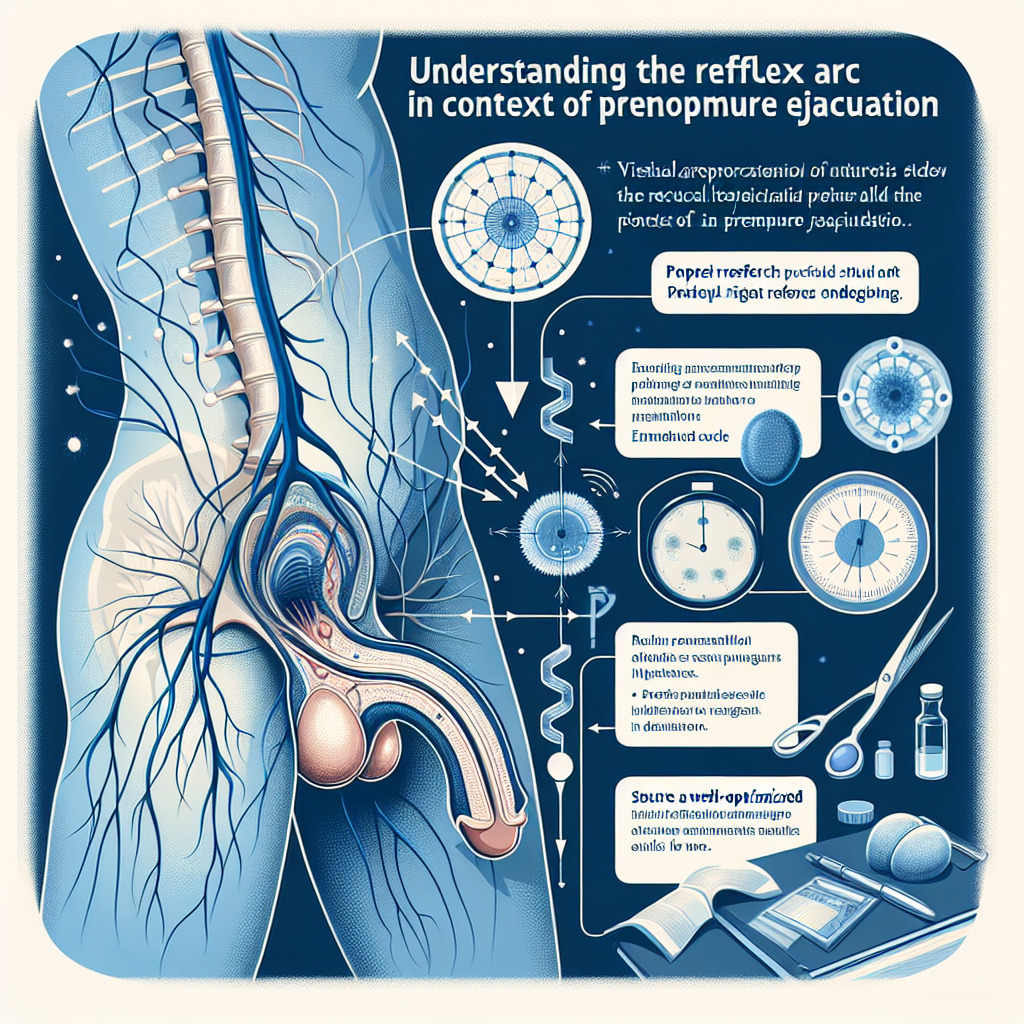
The ejaculatory reflex arc is a biologically programmed sequence of nerve signals and muscle activity that governs ejaculation. Consider it a form of autopilot controlled by your nervous system. Much like reflexively withdrawing your hand from a hot surface, ejaculation follows a predictable, often involuntary path—but one that can be regulated.
This arc involves a four-step process:
– Sensory Input: Physical stimulation of the penis sends signals through sensory nerves.
– Signal Integration: These signals reach the spinal cord, particularly the T12–L2 and S2–S4 segments.
– Motor Output: In response, the spinal cord triggers messages to pelvic muscles.
– Muscular Contraction: The prostate, seminal vesicles, and surrounding muscles contract, resulting in ejaculation.
This entire sequence occurs within seconds. However, in cases of hypersensitivity, the reflex fires too quickly—often before sexual satisfaction is achieved by either partner.
According to Dr. Robert Waldinger, professor of psychiatry at Harvard Medical School, “The male sexual response is designed to be biologically efficient for reproduction, not necessarily optimized for lasting intimacy.”
How the Brain Influences Ejaculation: The Role of the Central Nervous System
While the reflex arc centers in the spinal cord, the brain plays a crucial role in regulating sexual function. Key areas involved include:
– Medial preoptic area (MPOA) of the hypothalamus
– Paraventricular nucleus (PVN)
These regions manage both the timing and intensity of the ejaculation reflex. Several neurotransmitters modulate this process:
– Dopamine: Enhances desire and can quicken ejaculation.
– Serotonin: Helps delay ejaculation by inhibiting the reflex.
– Oxytocin: Promotes the muscular contractions required for release.
An imbalance, particularly low serotonin levels, can create a hyperactive ejaculatory response. This explains why some doctors prescribe SSRIs such as paroxetine or sertraline to help delay ejaculation.
You can explore physician-reviewed treatment options that support serotonin balance and help manage premature ejaculation at edrugstore.com.
Types of Premature Ejaculation and Reflex Sensitivity
Recognizing that premature ejaculation stems from neural activity allows us to categorize it more precisely. Research (Serefoglu et al., 2014) distinguishes two primary types:
1. Lifelong Premature Ejaculation: This type starts from the first sexual experience. It often results from an overactive reflex arc, hypersensitive nerve endings, or inherited neurochemical imbalances.
Example: A young man has consistently ejaculated within one minute of penetration since adolescence, regardless of partner or context.
2. Acquired Premature Ejaculation: Develops later in life after a history of typical sexual function. Root causes may include relationship stress, health issues like prostatitis, or side effects from medications.
Example: A man in his 40s who recently developed erectile dysfunction finds himself ejaculating more rapidly after experiencing high work-related stress.
In both scenarios, an overactive or maladapted reflex arc contributes to quick ejaculation.
How Emotions and Mental States Impact the Ejaculatory Reflex
Emotional and psychological factors significantly influence sexual performance. Stress and anxiety activate the sympathetic nervous system—the same system responsible for the body’s “fight or flight” response.
When a man experiences anxiety about his performance, adrenaline surges disrupt the calm required for sexual endurance. This biological stress response often accelerates ejaculation. Dr. Barry Komisaruk, a neuroscientist at Rutgers University, highlights this by saying, “Sexual anxiety doesn’t just interfere with pleasure—it actively tells your spinal reflexes to rush the process.”
Example: A man who suffered a humiliating first sexual encounter may subconsciously recreate that scenario in future experiences, reinforcing a premature response pattern even in relaxed situations.
Can You Retrain the Ejaculatory Reflex?
Yes—the ejaculatory reflex can be recalibrated, just like other habits and behaviors. Through a combination of physical techniques, mental training, and sometimes medical treatment, men can reduce sensitivity and gain more control.
Here are some proven approaches:
– Behavioral Techniques: Methods like the Stop-Start and Squeeze techniques help build awareness and delay climax with practice. These exercises train the body to pause the reflex loop.
– Cognitive Behavioral Therapy (CBT): Helps men confront and overcome mental roadblocks such as fear of failure or relationship anxiety.
– Pelvic Floor Exercises: Strengthening muscles like the pubococcygeus (PC) and bulbospongiosus improves voluntary control during sexual activity.
– Medications: SSRIs, topical desensitizers like lidocaine sprays, and alpha-blockers reduce physical sensitivity. To explore safe, physician-approved options, visit edrugstore.com.
– Mindfulness and Breathing Techniques: Encouraging the activation of the parasympathetic nervous system, these practices promote calm, aiding sexual control.
Dr. Lori Brotto, a clinical psychologist at the University of British Columbia, explains, “Mindfulness allows individuals to disengage from anxiety and reanchor themselves to bodily cues, offering direct pathways to ejaculatory control.”
Knowledge Leads to Control and Confidence
Premature ejaculation is not a personal failing—it’s a reflexive and sometimes chemical response steered by your body’s own systems. Fortunately, these systems are not fixed. With the right strategies, they can be trained, adapted, and improved.
Understanding the neurological workings of the ejaculatory reflex arc empowers men to move beyond short-term solutions. With up to one-third of men affected globally (Incrocci et al., 2014), there’s no shame in seeking answers or support.
Take Action: You’re Not Alone
If premature ejaculation is a concern for you, you’re far from alone. Consulting a sexual health expert can provide a tailored treatment plan that addresses both body and mind.
For confidential help and access to FDA-approved medications, visit a trusted provider like edrugstore.com.
Continue learning, ask questions, and take charge of your sexual health. A better understanding of your body is the first step toward feeling confident, satisfied, and in control.
References
– Serefoglu EC, et al. (2014). “Premature Ejaculation: From Etiology to Diagnosis and Treatment.” World Journal of Urology, 32(3), 491–498.
– Wright, E. (2020). “Prevalence and Risk Factors for Premature Ejaculation.” British Journal of Sexual Medicine.
– Incrocci, L. et al. (2014). “Management of Premature Ejaculation: A Review.” European Urology Supplement.
– Komisaruk, B. (2012). The Science of Orgasm. Johns Hopkins University Press.
– Brotto, L. (2018). Better Sex Through Mindfulness: How Women Can Cultivate Desire. Greystone Books.
This article is for educational purposes only and does not replace professional medical advice.
