
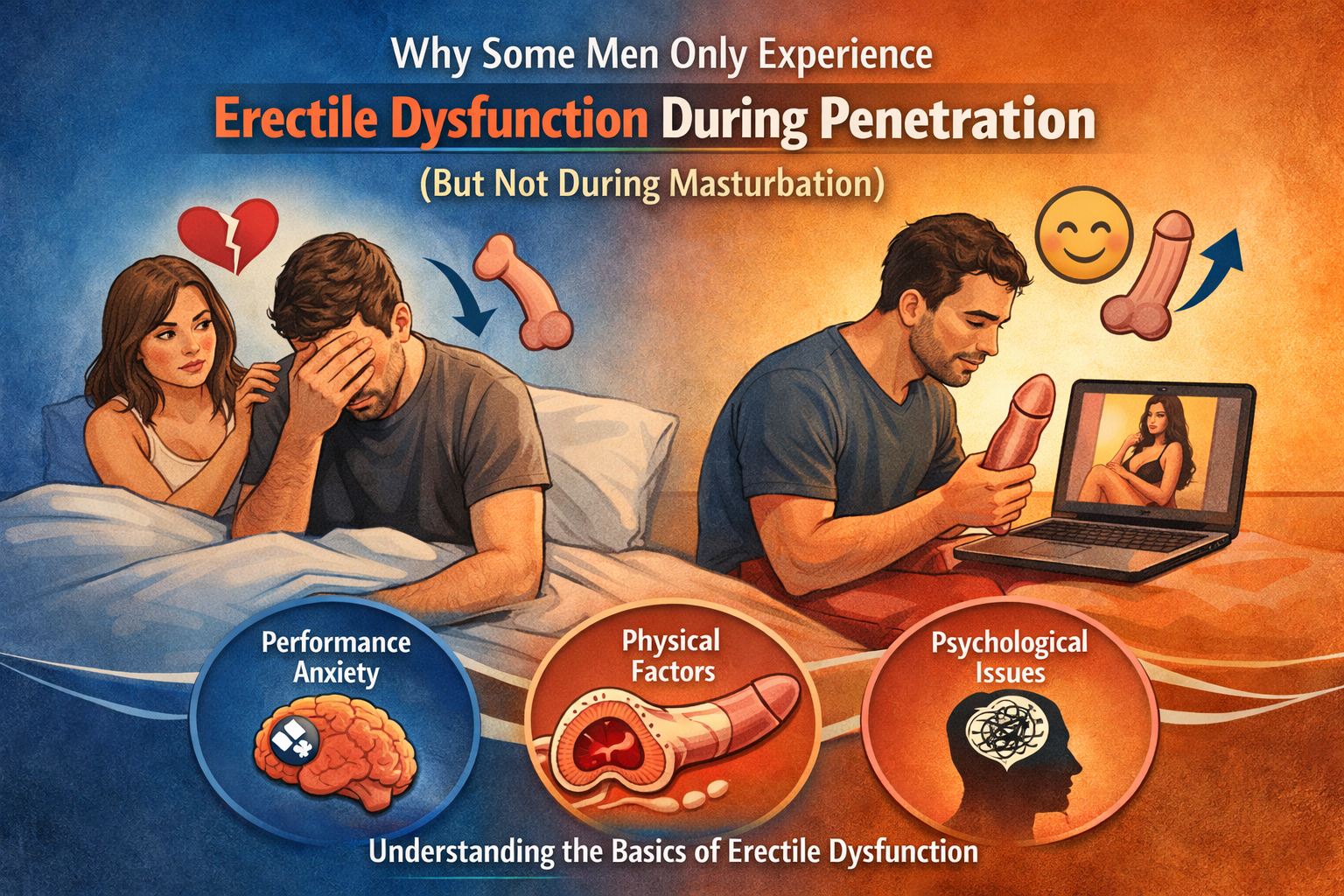
Why Some Men Only Experience Erectile Dysfunction During Penetration (But Not During Masturbation)
Understanding the Basics of Erectile Dysfunction
Approximately 30 million men in the United States experience some form of erectile dysfunction (ED), according to the Urology Care Foundation. One of the lesser-known types is situational ED, where a man experiences normal erections during masturbation but struggles during partnered sex.
This inconsistency can be confusing but is more common and treatable than many realize.
“Many men assume there’s a physical malfunction,” says Dr. Ian Kerner, licensed sex therapist and author. “But when erections are normal during solo activity, it’s often a signal the root cause is stress-related or psychological.”
Let’s explore the root causes and effective solutions for this form of ED.
What is Situational Erectile Dysfunction?
Situational erectile dysfunction—also known as erectile dysfunction during partnered sex—refers to the inability to get or maintain an erection during intercourse, despite having no difficulty achieving one during masturbation.
This pattern often points to psychological or emotional causes rather than physical ones. Still, it’s vital to eliminate any potential medical issues. Online health platforms like eDrugstore.com make it easy to consult with professionals about treatment options.
A 2021 study published in Sexual Medicine Reviews found that 85 percent of young men with ED had primarily psychological causes, such as low sexual confidence or anxiety.
How Performance Anxiety Affects Sexual Performance
One major cause of situational ED is performance anxiety. When a man feels pressured to “perform” well or fears sexual failure, it can activate the body’s stress response. This disruption, in turn, interferes with the arousal process.
In solo settings, the environment feels safe and familiar. During partnered sex, however, intrusive thoughts like:
– “What if I can’t stay erect?”
– “What if I finish too soon?”
– “Will they judge me?”
These worry-based thoughts can override natural arousal, leading to temporary ED.
Dr. Justin Lehmiller, research fellow at the Kinsey Institute, explains: “Stress and expectations are love’s worst enemies in bed. Relaxation—not pressure—is the key to sexual function.”
Other Emotional and Psychological Triggers
Beyond anxiety, several other emotional and psychological factors can impact sexual performance during partnered sex:
– Relationship tension, frequent disagreements, or lack of emotional connection
– Low self-esteem and feelings of inadequacy
– Past trauma or upbringing riddled with sexual shame
– Mental health conditions like depression or generalized anxiety
For example, someone who had an embarrassing sexual experience in the past may carry unconscious fears that resurface during intimacy, blocking arousal even years later.
These emotional burdens can subtly quiet desire and engagement, emphasizing the close connection between mental and physical arousal.
Why the Brain Is Central to Sexual Arousal
An erection isn’t just a physical response—it begins in the brain. Emotions, thoughts, and mental cues either help trigger arousal or shut it down.
When alone, you may feel relaxed and confident. You set the pace and focus. But in partnered sex, your mind might drift to uncertainty or distraction.
A review published in the Journal of Sexual Medicine in 2018 showed that emotions, mental states, and memory patterns can significantly interfere with the signals that control erection.
The Role of Pornography in Modern ED
Frequent and intense consumption of pornography can also affect arousal during real-life intimacy. This phenomenon, often called porn-induced erectile dysfunction, is not rooted in morality—but neurobiology.
Your brain adapts to repeated stimulation. If it’s trained to respond to high-speed, visually extreme porn, the subtle nuances of actual intercourse might feel underwhelming.
For example, a man used to watching intense content may feel disinterested in natural, slower-paced sex with a partner.
A 2016 survey in JAMA Psychiatry found that excessive porn use was linked to a decline in sexual satisfaction and performance among men under 40.
Taking a break from porn or switching to more realistic content can help rewire those mental arousal patterns.
Could Physical Health Still Be Playing a Role?
While the pattern of normal erections during masturbation suggests emotional causes, physical factors should not be ruled out. These may include:
– Hormonal imbalances like low testosterone
– Side effects from medications, especially antidepressants or blood pressure drugs
– Circulatory issues that emerge under physical strain during intercourse
– Differences in sensitivity or stimulation techniques between solo and partnered sex
Seeing a qualified provider can help pinpoint or eliminate physical factors. Platforms like eDrugstore.com allow for private, convenient assessments and treatment access.
Proven Ways to Improve Partner-Related Erectile Dysfunction
Fortunately, situational ED is highly manageable with the right approach. Here are evidence-based strategies to help improve function during partnered sex:
1. Communicate with Your Partner: Talk openly about what you’re experiencing. Reducing secrecy fosters trust and lowers pressure.
2. Seek Therapy: A mental health professional—especially one trained in sexual health—can help you explore underlying issues and build sexual confidence.
3. Practice Mindfulness: Exercises and apps focused on staying present in the moment can reduce anxiety and improve body awareness.
4. Explore Non-Penetrative Intimacy: Try other forms of connection like oral sex, mutual touch, or sensual massage to take the pressure off erections.
5. Evaluate Porn Habits: Monitor how much you watch, and consider whether it might be shaping unrealistic sexual expectations.
6. Consult a Doctor: A full screening can rule out hormonal or circulatory issues. Medications like sildenafil or tadalafil offer effective help when needed. Learn more and explore options at eDrugstore.com.
Final Thoughts: You Are Not Alone
Experiencing erectile dysfunction only during partnered sex is more common than many realize, and it does not mean you’re broken or inadequate.
This type of ED often stems from emotional or psychological roots, which are treatable with support, communication, and healthy lifestyle shifts.
Your sexual function is part of your overall well-being—not a measure of your worth. With the right steps, not only can you restore function, but you can also deepen connection and satisfaction.
Seeking help is a courageous and powerful first step.
References
1. Urology Care Foundation. “Erectile Dysfunction (ED).” https://www.urologyhealth.org/urologic-conditions/erectile-dysfunction
2. Lehmiller, Justin. “The Psychology of Sexual Performance Anxiety.” Kinsey Institute, 2020
3. Journal of Sexual Medicine. 2018. “The Role of Psychogenic Factors in Erectile Dysfunction.”
4. JAMA Psychiatry. 2016. “Pornography Use and Sexual Satisfaction in Young Men.”
5. Sexual Medicine Reviews, 2021. “Erectile Dysfunction in Young Men: Prevalence and Causes.”
6. American Association of Sexuality Educators, Counselors and Therapists (AASECT). https://www.aasect.org
Ready to explore solutions and speak to a licensed provider? Get expert help through eDrugstore.com and take the first step toward restored confidence.
