
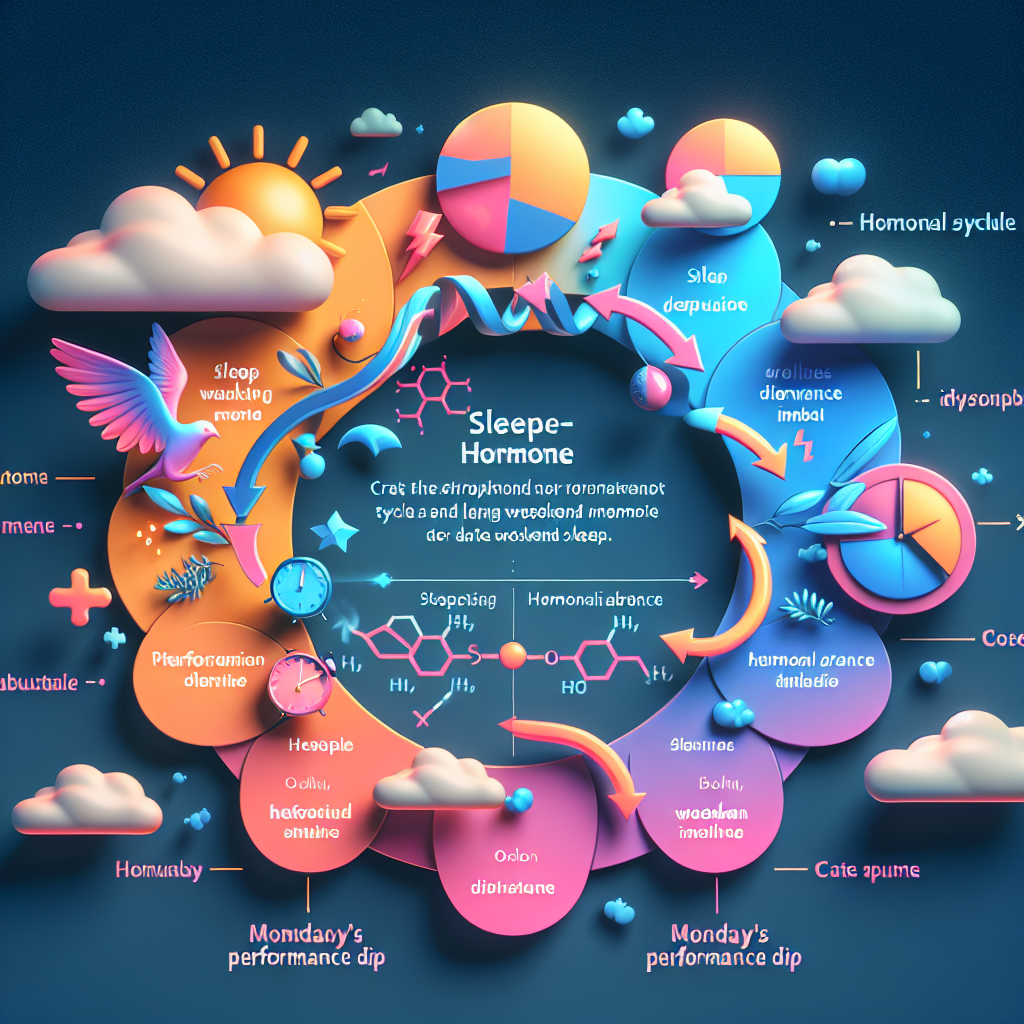
How Weekend Sleep Habits Disrupt Your Hormones and Hurt Monday Performance
Weekends often feel like the perfect time to ditch early alarms, stay up late watching Netflix, or sleep past noon. While these habits may seem like a well-deserved reset, they can actually trigger what researchers call the sleep-wake hormone lag—a hidden reason behind that dreaded Monday morning brain fog.
This issue isn’t just about being tired. It’s about how your body’s internal clock and hormones fall out of sync when your sleep schedule changes. In this article, we’ll break down how irregular weekend sleep patterns can hurt your focus, energy, and mental sharpness—and provide practical tips to get your sleep schedule back on track.
What Is Social Jet Lag and Why Does It Make Mondays So Hard?
The term social jet lag describes the mismatch between your internal body clock and your weekday social obligations, like work or school. A 2012 study published in Current Biology found that approximately 87% of people experience social jet lag between weekdays and weekends. The result can feel like actual time zone travel, causing grogginess, poor focus, and irritability.
On weekdays, alarms wake us early, but by Friday night, people tend to push bedtime later—and then sleep in the next day by two to three hours.
Dr. Till Roenneberg, a leading chronobiologist and one of the first to research this phenomenon, explains:
“When you disrupt your usual sleep pattern—even by just a couple of hours—it confuses your internal clock in much the same way as jumping two time zones east overnight.”
In short, by Monday morning, your body feels like it’s recovering from jet lag—even though you never left home.
How Melatonin and Cortisol Control Your Sleep-Wake Cycle
Your body’s sleep-wake rhythm is primarily managed by two hormones: melatonin and cortisol. Melatonin increases at night, signaling it’s time to sleep, while cortisol rises in the early morning, helping you feel alert and energized.
Staying up late on the weekend delays the release and natural cycling of these two hormones.
For example, imagine you stay up until 2 a.m. on Saturday and sleep in until 10 a.m. On Monday morning at 6 a.m., when you try to wake up for work, your melatonin levels are still high, and cortisol has yet to reach its peak. This misalignment causes that foggy feeling many experience at the start of the week.
This kind of hormonal delay is known as sleep inertia or hormonal jet lag. It’s a leading cause of lower focus, memory problems, mood changes, and reduced performance in cognitive tasks. (Sleep Research Society, 2021)
Why Monday Brain Fog Is More Than Just Fatigue
That sluggish mental state on Monday mornings may not simply be from lack of sleep—it’s likely tied to disruption in your circadian rhythm.
Studies from both Harvard Medical School and Stanford University have shown that irregular sleep patterns can negatively affect executive function. These are the brain’s management skills, such as decision-making, memory, focus, and impulse control.
One study cited by NPR in 2019 revealed that those with inconsistent sleep schedules were 45% more likely to underperform at school or work.
Furthermore, sudden sleep shifts on the weekend often lead to heightened stress and anxiety on Sunday evenings—a trend often referred to as the “Sunday Scaries.” This emotional disturbance has been linked to cortisol rhythm disruptions.
Sleep psychologist Dr. Shelby Harris says:
“When your cortisol rhythm is disrupted, your body’s natural ‘get up and go’ hormone misfires—and that can cause Sunday night panic and Monday morning dread.”
Top 5 Weekday-Weekend Sleep Fixes to Reset Your Body Clock
There’s good news: you don’t have to sacrifice your weekend fun just to feel sharp on Monday. A few smart habits can preserve your internal rhythm and help you start your week fresh and focused.
1. Keep Your Wake-Up Time Consistent—Even on Weekends
It’s okay to sleep in occasionally, but try to stick within about one hour of your usual weekday wake-up time. A wider gap can delay your circadian rhythm and disrupt hormone timing.
2. Prioritize 7–9 Hours of Weeknight Sleep
Avoid “catching up” on weekends by getting enough sleep throughout the week. Chronic lack of weekday rest throws off your melatonin and cortisol balance, increasing the need for weekend oversleep—leading into a cycle of misalignment.
3. Use Morning Sunlight to Boost Alertness
Natural light in the morning helps reset your internal clock. Just 15 to 30 minutes of light exposure can help reduce melatonin and perk up cortisol production.
During darker seasons, using a 10,000-lux light therapy box—commonly recommended by sleep doctors—can provide similar benefits.
4. Don’t Oversleep and Avoid Long Daytime Naps
Sleeping too long can confuse your body clock and make it harder to fall asleep later. If you feel tired, a brief nap of 20 to 30 minutes can refresh your brain without disrupting nighttime sleep.
Need assistance regulating your sleep cycle? FDA-approved melatonin supplements and sleep aids are available online from trusted providers like edrugstore.com.
5. Start Winding Down Earlier on Sunday
If you struggle to fall asleep Sunday night, it’s likely because your hormones are still on weekend time. Help your body adjust with a calming evening routine. Try reading a book, dimming the lights, or doing gentle stretching. Avoid screens and caffeine after 3 p.m. to prevent melatonin delays.
Why Consistency Is Key to Better Sleep and Better Mondays
Getting adequate sleep isn’t just about quantity—it’s also about timing. Even minor shifts in your routine can create noticeable hormonal and neurological imbalances.
Sticking to a regular sleep and wake routine strengthens your body’s natural rhythm. It helps align melatonin and cortisol so these important hormones work with you, not against you.
Next time you’re tempted to stay up until 2 a.m. and sleep past 10 a.m. on the weekend, think of your future self. A stable sleep schedule is one of the easiest and most powerful ways to enhance your focus, improve mood, and tackle Mondays with greater clarity and energy.
Your mind—and your Monday—will thank you.
References
– Wittmann M, Dinich J, Merrow M, Roenneberg T. Social jetlag: misalignment of biological and social time. Current Biology. 2006;16(23):R983-5.
– Sleep Research Society. Hormone Lag and Sleep Timing Mismatch. Journal of Clinical Sleep Medicine. 2021.
– Harris, S. The Women’s Guide to Overcoming Insomnia. Norton & Company. 2022.
– Harvard Medical School. Why Circadian Rhythm Disruption Affects Cognitive Function. health.harvard.edu
– NPR. (2019). Why Irregular Sleep Hurts Your Brain.
