Blue Light and Bedroom Energy: How Screens Impact Male Hormones
In our tech-driven era, screens are more present in our lives than ever. From smartphones and tablets to laptops and TVs, they keep us constantly connected. But with convenience comes a cost—blue light. While most people have heard how this light affects sleep and eye strain, its deeper effects on male hormones are just beginning to come to light. In this article, we explore how nighttime screen use could be quietly draining your energy, testosterone, and sexual vitality.
What Is Blue Light—and Why It Matters
Blue light is a high-energy, short-wavelength light that naturally occurs in sunlight and is artificially emitted by devices and LED lights. During the daytime, blue light helps keep us alert, improves mood, and supports cognitive function. But after dark, it can throw our internal body clock—the circadian rhythm—completely off.
Your circadian rhythm governs your sleep cycle and hormone production. According to the Sleep Foundation, exposure to blue light in the evening delays the release of melatonin, the sleep hormone, making it harder to fall asleep.
Why does this matter so much for men? Disrupting your sleep cycle also disrupts testosterone production—a hormone critical not just for sex drive, but overall male health.
The Link Between Interrupted Sleep and Lower Testosterone
Testosterone plays a vital role in energy levels, muscle development, sexual function, and mood. Crucially, your body produces most of its testosterone during REM and deep sleep, the very stages compromised by poor sleep quality.
A study conducted by the University of Chicago found that young men limited to five hours of sleep per night for just one week experienced a 10–15 percent drop in testosterone levels (Leproult & Van Cauter, 2011). That sharp decrease can trigger a noticeable dip in libido, motivation, and energy.
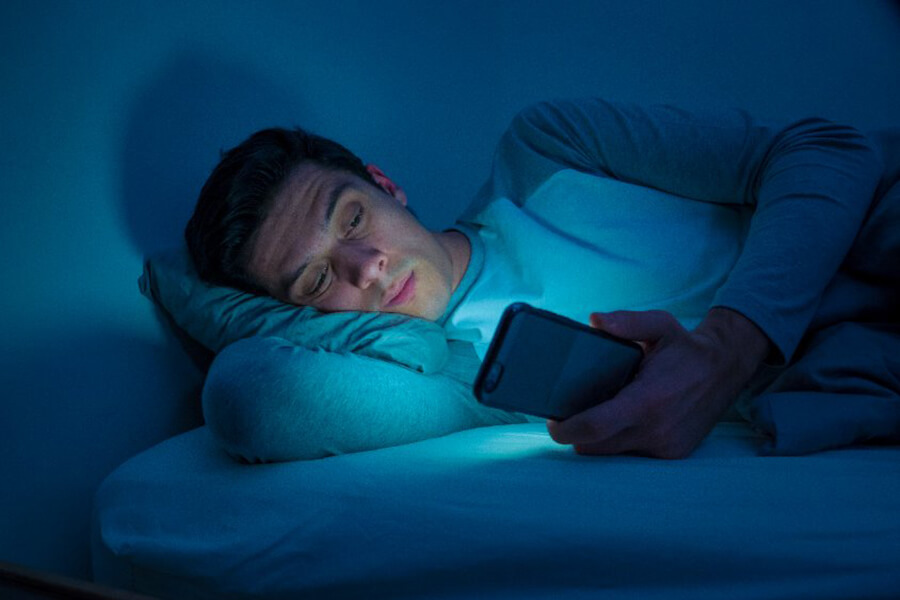
Here’s the problem: Screens mimic daylight. If you’re watching TV or scrolling through social media late into the night, your brain may think it’s still daytime, delaying melatonin and preventing deep restorative sleep. Less deep sleep equals less testosterone.
How Blue Light Steals “Bedroom Energy”
Testosterone fuels more than just muscle—it powers libido, sexual stamina, and arousal. When levels drop due to sleep disruption, sexual performance can quickly decline.
Dr. Michael Breus, a board-certified sleep specialist, explains, “When sleep suffers, testosterone suffers. It’s a tight hormonal loop.” But there’s more: Extended nighttime screen use can also increase cortisol, the body’s stress hormone. Elevated nighttime cortisol reduces testosterone even further, creating a double blow to your hormonal balance and bedroom performance.
If you often feel restless at night, mentally drained, or notice a decline in sexual function, consider this: The issue might not be psychological—it could be your body’s hormone rhythm being thrown off by screen exposure.
Could Screen Time Affect Fertility?
Emerging studies suggest a direct connection between blue light and male fertility. A 2020 study published in Fertility and Sterility discovered that men who used screens for more than two hours in the evening had significantly lower sperm concentration and motility compared to those with minimal screen exposure (Golan et al., 2020).
Considering male factors play a role in 40–50 percent of infertility cases in the U.S. (CDC, 2022), minimizing screen use before bed becomes more than just a health suggestion—it becomes a potential fertility saver.
For couples trying to conceive, managing hormone health is essential. Cutting down blue light in the evening could be the simplest boost to your reproductive health.
Simple Strategies to Reduce Blue Light Exposure
The good news: You don’t have to eliminate technology to fix your hormone health. Start with small, sustainable habits that protect your circadian rhythm and hormonal balance.
1. Use Night Shift or Blue Light Filter Modes
Most devices now offer a built-in blue light filter. Activate this feature at least one to two hours before bed to reduce circadian disruption.
2. Wear Blue Light Blocking Glasses
These lenses filter out high-energy blue light. Studies show they can improve melatonin levels and enhance sleep when worn in the evening.
3. Set a Digital Curfew
Turn off all screens at least 60 minutes before bedtime. Replace them with calming, screen-free activities such as reading, journaling, or stretching.
4. Get More Morning Sunlight
Natural light during the first hours of the day helps reset your circadian rhythm. A simple 15-minute walk in the morning sunlight can support better melatonin release at night and healthier testosterone cycles.
Tip: If you experience persistent symptoms such as fatigue, low libido, or poor sleep, consider consulting a telehealth provider like edrugstore.com for testosterone evaluation and personalized health support.
Final Thoughts: Sync with Light to Recharge Your Hormones
While screens have become essential, your body still depends on nature’s rhythms. Nighttime exposure to blue light tells your brain to stay awake when it should begin winding down. This disrupts melatonin and testosterone production, leading to reduced energy, low libido, poor sleep, and even fertility challenges.
If you’re regularly feeling worn out, less confident in your performance, or emotionally drained, reassess your nighttime tech habits. Limiting screen exposure could be a game-changer for your hormonal health.
Your body wasn’t built for 24/7 screen time—it was designed to rest, recover, and produce hormones in alignment with light and darkness. Reduce your blue light exposure at night and give your body the chance to restore itself naturally. You may be surprised how much better you sleep, feel, and perform.
Need Help Balancing Hormones?
If symptoms persist, seek medical advice from a hormone specialist. You can discreetly explore testosterone testing and treatment options with licensed experts through trusted telemedicine platforms such as edrugstore.com.
References
– Leproult, R., & Van Cauter, E. (2011). Effect of 1 week of sleep restriction on testosterone levels in young healthy men. JAMA, 305(21), 2173–2174.
– Golan, R., Lunenfeld, E., Kaplan, T., Levitas, E., & Licht, G. (2020). Artificial light at night at the bedroom and use of electronic devices are associated with male infertility. Fertility and Sterility, 114(2), 347–354.
– Centers for Disease Control and Prevention. (2022). Infertility FAQs. https://www.cdc.gov/reproductivehealth/infertility/index.htm
– Sleep Foundation. (n.d.). How Blue Light Affects Sleep. https://www.sleepfoundation.org/articles/how-blue-light-affects-sleep
