
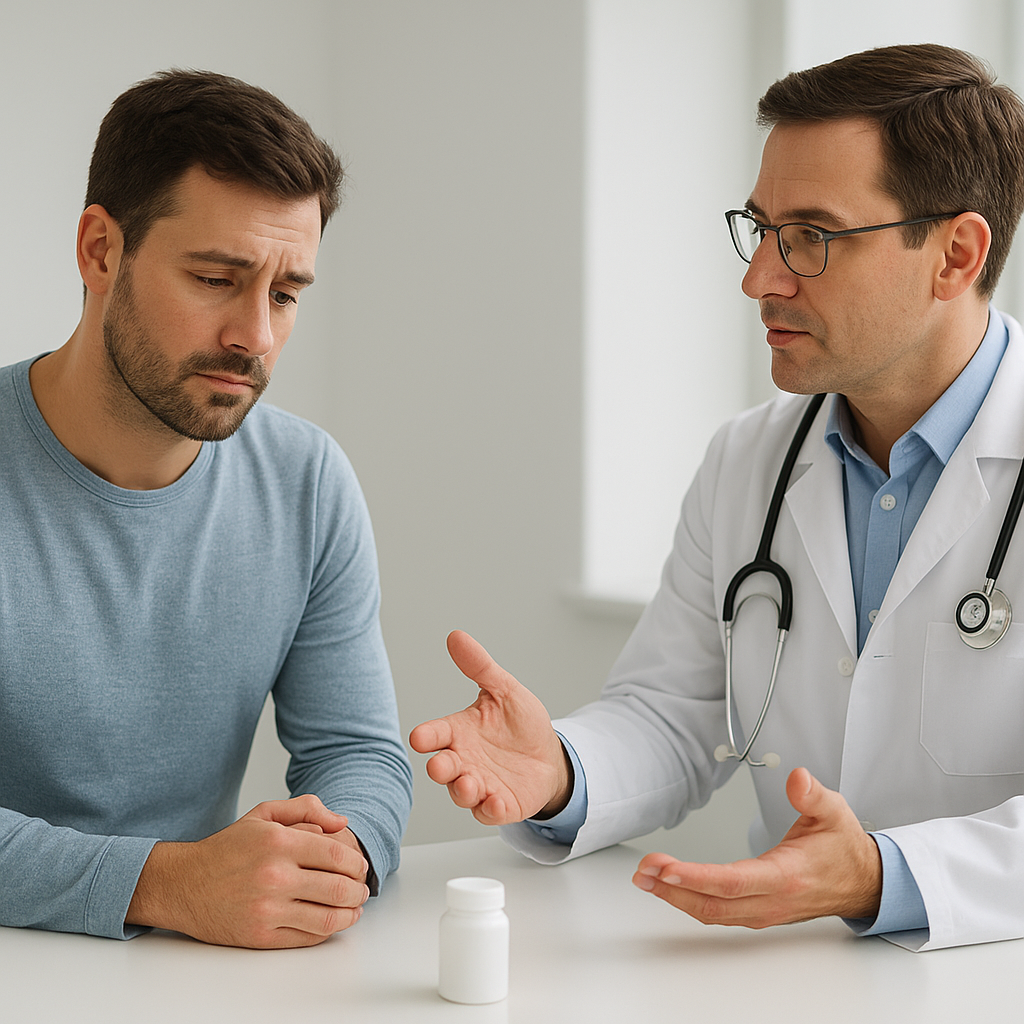
Meta title. Why Situational Erectile Dysfunction Happens With New Partners
Meta description. Learn why situational erectile dysfunction often occurs with new partners, how anxiety and psychological triggers affect erections, and what treatment options can help.
Introduction
It can feel confusing and frustrating when erections are reliable during masturbation or in a familiar relationship, but suddenly become difficult with a new partner. This pattern is often called situational erectile dysfunction, and it is more common than many men realize.
Erectile dysfunction, or ED, affects more than 30 million men in the United States. Reference 1. While many people think ED is always caused by age, low testosterone, or poor blood flow, that is not always true. For many men, especially when symptoms happen only in certain settings, the cause is often linked to stress, pressure, anxiety, or the brain body connection.
This article explains why situational erectile dysfunction can happen with new partners, what psychological triggers are involved, how to tell when it may be more than nerves, and what evidence based treatments can help.
What Is Situational Erectile Dysfunction
Situational erectile dysfunction means a man has trouble getting or keeping an erection in some situations, but not others. For example, erections may be normal:
- During masturbation
- When waking up in the morning
- With a long term partner
- When watching sexual content
But erections may become difficult:
- With a new partner
- During first time sex
- When using a condom
- After a past embarrassing sexual experience
- When feeling pressure to perform
Doctors define erectile dysfunction as a repeated difficulty getting or maintaining an erection firm enough for sex. Reference 2. Situational ED does not mean a man is not attracted to his partner. It also does not mean he is permanently unable to have sex. In many cases, it is a temporary and treatable response to stress, fear, or overthinking.
Why New Partners Can Trigger Erectile Problems
Sex with a new partner can create excitement, but it can also create pressure. A man may want to make a good impression, avoid disappointment, or prove that he is sexually confident. These thoughts can activate the stress response.
An erection depends on healthy blood flow, nerve signals, hormones, and mental arousal. When the brain feels safe and sexually engaged, it helps send signals that increase blood flow to the penis. When the brain senses danger, embarrassment, or pressure, the body releases stress chemicals that can interfere with that process.
This is why a man may feel very attracted to a new partner but still lose an erection. The issue is not lack of desire. It is often a conflict between arousal and anxiety.
Research has shown that anxiety and cognitive distraction can play a major role in male sexual dysfunction. Reference 3. In simple terms, when the mind is busy monitoring performance, worrying about the erection, or predicting failure, it has a harder time staying connected to pleasure.
The Performance Anxiety Cycle
Performance anxiety is one of the most common psychological triggers behind situational erectile dysfunction. It often follows a cycle.
- A man has one difficult sexual experience.
- He feels embarrassed or worried it will happen again.
- The next time he has sex, he monitors his erection closely.
- That monitoring increases stress.
- Stress makes the erection harder to maintain.
- The experience confirms his fear, and the cycle continues.
This cycle can happen quickly, even after one episode. With a new partner, the fear may feel stronger because the relationship does not yet have enough trust, communication, or sexual familiarity.
Cleveland Clinic notes that sexual performance anxiety can cause physical symptoms, including trouble getting or keeping an erection. Reference 4. The body is not broken. It is reacting to emotional pressure as if it were a threat.
Common Psychological Triggers With New Partners
Situational erectile dysfunction often has more than one trigger. Common triggers include:
- Fear of judgment. Worrying that a partner will think poorly of your body, penis size, stamina, or sexual skill.
- Pressure to perform. Feeling that sex must be perfect or that an erection must happen immediately.
- Past negative experiences. A previous episode of ED, rejection, teasing, or sexual shame can create future anxiety.
- Condom related stress. Some men lose focus or sensation when putting on a condom, especially if they worry about losing the erection.
- Relationship uncertainty. New relationships can bring emotional vulnerability, fear of rejection, or unclear expectations.
- Alcohol or recreational drugs. Alcohol can reduce inhibition, but it can also impair erections and sexual response.
- Porn comparison or unrealistic expectations. Comparing real sex to scripted sexual content may increase pressure and reduce confidence.
These triggers can create a loop of anxiety, distraction, and reduced arousal. Over time, the fear of ED may become more powerful than the original cause.
How The Brain Affects Erections
Erections are not controlled only by the penis. They are controlled by the nervous system, blood vessels, hormones, and emotional state.
The parasympathetic nervous system helps the body relax and supports erection. The sympathetic nervous system is linked to stress and fight or flight responses. When stress is high, the body may prioritize alertness over sexual function.
Harvard Health explains that psychological factors such as anxiety, depression, stress, and relationship problems can contribute to ED. Reference 5. This is especially important in men who have normal erections at other times.
In situational erectile dysfunction, the physical system may be working well, but the brain is sending mixed signals. The man wants sex, but another part of the brain is focused on risk, failure, or embarrassment.
When Situational ED May Signal A Medical Issue
Even when ED seems psychological, it is still worth paying attention to overall health. Erectile dysfunction can sometimes be an early sign of heart disease, diabetes, high blood pressure, or vascular problems. Reference 1.
Consider speaking with a licensed healthcare provider if:
- ED happens in most or all sexual situations
- Morning erections have decreased or disappeared
- Symptoms started after a new medication
- You have diabetes, high blood pressure, high cholesterol, or heart disease
- You have low sex drive, fatigue, or symptoms of low testosterone
- You have pain, curvature, or injury to the penis
- ED lasts longer than 3 months
A clinician may review medications, mood, relationship stress, sleep, hormone symptoms, and cardiovascular risk factors. Blood pressure, blood sugar, cholesterol, and testosterone testing may be recommended depending on the situation.
How Understanding Triggers Helps Men Overcome It
Understanding the trigger lowers fear. Many men assume one failed erection means something is deeply wrong. That belief increases pressure and makes ED more likely to happen again.
When a man recognizes that situational erectile dysfunction is often a stress response, he can respond with practical steps instead of panic. The goal is not to force an erection. The goal is to reduce threat, rebuild confidence, and reconnect with pleasure.
Helpful strategies include:
- Name the pattern. Remind yourself that this happens only in certain situations, which often points to anxiety or pressure.
- Slow down. Rushing can increase pressure. More time for kissing, touch, and relaxation can help arousal build naturally.
- Stop monitoring the erection. Constant checking increases anxiety. Focus on sensation, breathing, and connection instead.
- Communicate simply. Saying, I am attracted to you, I just need a minute to relax, can reduce pressure.
- Remove the goal for a while. Sex does not have to begin with penetration. Taking penetration off the table temporarily can help break the performance cycle.
- Practice condom comfort. Try different sizes and styles, and practice putting one on during masturbation to reduce anxiety.
These steps may sound simple, but they can help retrain the nervous system to associate sex with safety instead of pressure.
Treatment Options For Situational Erectile Dysfunction
Treatment depends on the cause, frequency, and health history. Many men benefit from a combination of psychological, lifestyle, and medical support.
Therapy and sex therapy. Cognitive behavioral therapy, sex therapy, or couples counseling can help men address performance anxiety, negative thoughts, shame, and communication issues. PubMed research supports the role of psychological factors in erectile problems, especially anxiety and distracting thoughts. Reference 3.
Lifestyle changes. Regular exercise, better sleep, weight management, and limiting alcohol can support erection quality. A PubMed meta analysis found that lifestyle changes and cardiovascular risk reduction can improve erectile function in men with ED. Reference 6. The CDC recommends regular physical activity for overall cardiovascular and metabolic health. Reference 7.
Medication review. Some antidepressants, blood pressure medicines, opioids, and other drugs can contribute to ED. Never stop a prescribed medication without medical guidance, but ask a clinician if medication side effects may be part of the problem.
PDE5 inhibitors. Medications such as sildenafil, tadalafil, vardenafil, and avanafil can improve blood flow to the penis. These medications are FDA approved for erectile dysfunction and are commonly used when appropriate. Reference 8. They do not create sexual desire on their own, but they can improve the physical erection response when arousal is present.
Common side effects may include headache, flushing, nasal congestion, indigestion, dizziness, back pain, or vision changes, depending on the medication. Men who take nitrates for chest pain should not use PDE5 inhibitors because the combination can cause a dangerous drop in blood pressure. Reference 8.
Telemedicine care. Telemedicine can be a convenient way to discuss ED with a licensed healthcare provider, review health history, and determine whether medication or lab testing is appropriate. A proper evaluation is important, even when symptoms seem situational.
Hormone testing. Low testosterone is not the most common cause of situational ED, but it can contribute to low libido, fatigue, reduced morning erections, and weaker sexual response. If symptoms suggest a hormone issue, a clinician may order morning testosterone testing.
What Not To Do When ED Happens With A New Partner
The way a man responds to one episode can affect whether it becomes a repeated pattern. Try to avoid these common reactions:
- Do not assume attraction is gone.
- Do not apologize repeatedly or panic.
- Do not force penetration to prove something.
- Do not drink heavily to relax.
- Do not buy unregulated ED pills online.
- Do not ignore ED if it becomes frequent or persistent.
The FDA warns consumers about many hidden drug ingredients in sexual enhancement products sold online or in stores. Reference 9. Some products contain undeclared prescription ingredients that may be unsafe, especially for men with heart disease or those taking other medications.
FAQ
Why can I get hard alone but not with a new partner
This often points to situational erectile dysfunction. When erections are normal during masturbation or sleep, the physical system may be functioning well. With a new partner, anxiety, pressure, fear of judgment, or distraction can interfere with arousal and blood flow.
Does situational erectile dysfunction mean I am not attracted to my partner
No. Attraction and erection are related, but they are not the same thing. A man can feel strong attraction and still have erection trouble if stress or performance anxiety is high.
How long does situational ED last
It depends on the cause and how it is handled. Some men improve after one honest conversation or a few lower pressure sexual experiences. Others may need therapy, lifestyle changes, or medication support. If ED lasts more than 3 months or happens in most situations, medical evaluation is recommended.
Can ED medication help if the cause is anxiety
Yes, it can help some men. PDE5 inhibitors can improve the physical erection response, which may reduce fear and help rebuild confidence. However, medication works best when combined with arousal, relaxation, and attention to psychological triggers. It should be used only under medical guidance.
Should I tell a new partner about performance anxiety
In many cases, a simple and calm explanation can help. You do not need to over explain. Saying that you are attracted but feeling a little pressure can reduce tension and make the experience feel safer for both people.
When should I see a doctor for situational erectile dysfunction
Speak with a licensed healthcare provider if ED is frequent, worsening, lasts more than 3 months, or occurs along with low libido, reduced morning erections, chest pain, diabetes, high blood pressure, or medication changes.
Conclusion
Situational erectile dysfunction with a new partner is common, treatable, and often linked to psychological triggers such as performance anxiety, fear of judgment, and stress. It does not mean a man is broken, unattracted, or unable to have a healthy sex life.
Understanding the anxiety cycle can help men respond with less shame and more confidence. Slowing down, communicating clearly, reducing pressure, improving lifestyle habits, and seeking professional support can all make a meaningful difference.
If erectile problems are persistent, frequent, or causing distress, speak with a licensed healthcare provider. A proper evaluation can help identify whether the cause is psychological, physical, medication related, or a combination of factors.
References
1. NIH, National Institute of Diabetes and Digestive and Kidney Diseases, Erectile Dysfunction, www.niddk.nih.gov/health-information/urologic-diseases/erectile-dysfunction
2. Mayo Clinic, Erectile Dysfunction, Symptoms and Causes, www.mayoclinic.org/diseases-conditions/erectile-dysfunction/symptoms-causes
3. Barlow DH, Causes of Sexual Dysfunction, The Role of Anxiety and Cognitive Interference, Journal of Consulting and Clinical Psychology, PubMed, pubmed.ncbi.nlm.nih.gov/3722560
4. Cleveland Clinic, Sexual Performance Anxiety, my.clevelandclinic.org
5. Harvard Health Publishing, Erectile Dysfunction, www.health.harvard.edu
6. Gupta BP, Murad MH, Clifton MM, Prokop L, Nehra A, Kopecky SL, The Effect of Lifestyle Modification and Cardiovascular Risk Factor Reduction on Erectile Dysfunction, Archives of Internal Medicine, PubMed, pubmed.ncbi.nlm.nih.gov/21747023
7. CDC, Benefits of Physical Activity, www.cdc.gov/physical-activity
8. FDA, Viagra Prescribing Information and PDE5 Inhibitor Safety Information, www.accessdata.fda.gov
9. FDA, Tainted Sexual Enhancement Products, www.fda.gov/drugs/medication-health-fraud/tainted-sexual-enhancement-products
